Business negotiations are a fact of life for most professionals. But there's a world of difference between smart negotiation tactics and manipulative ploys.
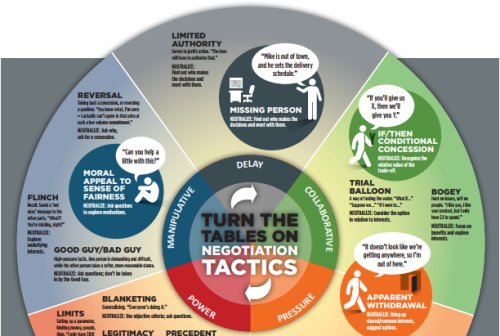
Many people mistakenly put too much energy into manipulating others to get what they want instead of strategizing to conduct a mutually respectful negotiation. We've all seen these manipulative ploys - behaviors designed to throw the other negotiator off-guard so he inadvertently agrees to things while emotionally unnerved. These include maneuvers such as deferring decisions to a higher authority to buy time, asking for more at the end of the negotiation, artificially raising one's voice to challenge a stated price, or pitting offers against those of fictitious competitors.
The ethical negotiator resists these shortcuts, and instead uses a professional and methodical approach. Here are nine tips to help you succeed as a savvy, ethical negotiator:
o Plan your strategy. Know ahead of time what you want, what you think you'll get, and what your "walk away" position is. During the planning phase, set your aspirations as high as possible and find out as much as you can about the other negotiator. Ask yourself, "What will they likely open with or ask for during the meeting?"
o List your "bargaining currencies." Compile a list of items you may use to bargain with during the negotiation in order to move the discussion in a favorable direction. Currencies can include the timing of a final transaction, the support and service required, or the number of units you will take. The longer your list, the stronger your starting position.
o Research the other negotiator. Find out as much as possible about the other party beforehand. Is he/she a forceful negotiator? Does he/she have time constraints on the project? Is his/her company solidly in place or is it one that is still building a reputation? If you know the other negotiator's style you will be able to modify how you typically communicate in a way that flexes more in the other person's direction, thus improving rapport.
o Create a positive climate. Your goal when face-to-face with your negotiator is to be conversational, relational, and energetic. Body language should communicate receptivity and a willingness to listen to the other person's point of view.
o Bring an agenda both parties can use. This action will subtly give you control over the meeting. Get agreement from your fellow negotiator. Saying something like, "Does this include everything we need to discuss?" will ensure that you are both at the same starting point. If the other negotiator challenges the content of the agenda, this will be the first part f the negotiation you must tackle.
o Neutrally obtain information. Ask open-ended questions to gain as much information as possible during the negotiation. At this stage, remain as nonjudgmental as possible. For example, acknowledge everything but agree to little. During this phase focus on uncovering the importance of various factors to your opponent. If you know what the other person values and in what order, you will be a better negotiator.
o State positions. You and your fellow negotiator must state your respective positions, which often means talking price. Always get the other person to talk dollars first, because it generally gives you a stronger position. Remember, unless both of you clearly know the other's starting position, subsequent negotiation will be fruitless.
o Bargain methodically. Remember that giving and getting concessions is part of the process. For every concession you give, make sure you receive one in return. Because most concessions occur at the end of a negotiation, retain as many of them as long as possible so you can trade at the very end.
o Agree in writing. You should write a contract as soon as possible outlining agreements. If the final legal document will take some time, at least get a co-signed letter of agreement while you await detailed paperwork.