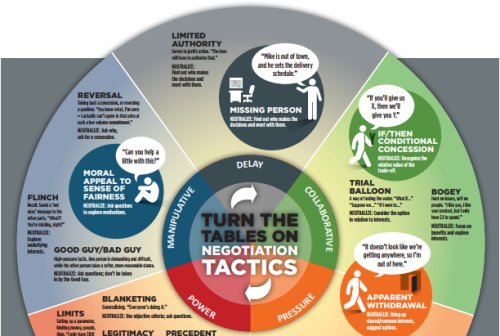
In business, effective negotiation skills are of paramount importance. Whether closing the deal, haggling over the price of a supplies agreement, or handling a pay raise conversation with a valued employee, a business owner relies on these skills for a robust bottom line. While you may already be an effective negotiator, you may want to consider some strategies that can help you maximize the chances of achieving the results you desire in business negotiations.
A truly effective negotiator seeks to arrive at mutually beneficial conclusions. Those entering negotiations are each seeking value that wasn't there previously. To ensure successful negotiations, it is imperative to offer that value to the other party. Don't ignore your own self-interest, but enter the discussion having first closely considered what may be needed or sought by the other party. If you initially reflect on upon partner's priorities, it is much more likely that negotiations will work well.
Prior to bargaining on an important deal, be prepared. For example, if you are preparing to offer your product at a certain price level, be prepared to demonstrate commensurate value by offering testimonials about the quality of the your product, and its worth relative to like products in the marketplace, as well as offering information about the price of similar products sold through your competitors. Consider role-play practicing your sales presentation with a colleague, being sure to seek input on how to can improve your skills and approach.
It is wise to learn as much as possible about your negotiation counterpart prior to reaching the bargaining table. This will help you tailor your offer to meet the unique needs of your customer. For many in sales, it is all too easy to allow a sales call to proceed by rote, underscoring to potential customers that the negotiator has not considered their specific needs. Through the sales discussion, it is important to demonstrate that there has been much thought put into marrying product and service features with the needs of the prospect.
As a customer, you will be able to contribute strongly to your company's bottom line using effective negotiations. First, arm yourself with information about the product or service you are considering. Having done your research on competitor's prices and offerings will allow you to ask more pointed questions to gave value for your dollar. Be cognizant of the target price you seek, and the amount to which you would consider drifting from that price in exchange for further value, such as free delivery, or a discount based upon volume purchases.
Pay close attention to what your negotiating counterpart is asking for, and consider what flexibility you can offer to achieve a win-win scenario. As with any purchase, don't feel rushed or pressured. Reserve the right to seek more time to consider any new requests or demands for concessions before you actually come to a final agreement.
In some cases, what you are negotiating may be quite large and have additional layers of complexity. If this is the case, be on the lookout for any hidden agenda, remind yourself of your objective, and postpone further negotiations as soon as you encounter something do not understand. On the other side of the equation, don't unduly pressure your prospects to make an on-the-spot decision if they don't understand. Bygone high-pressure sales tactics are short sighted, sacrificing the long-term profitable relationship on the altar of the immediate sale. At risk is could be your reputation within the business community.
Of course, some negotiations end with neither party being willing to offer further flexibility. Don't burn your bridges! Remain genteel and respectful. Let your counterpart know you appreciate the time invested so far. Use this as a stepping-stone to building a relationship that could yield fruit down the road.