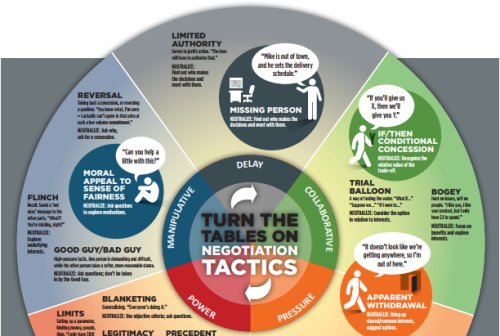
Have you ever stopped to think why negotiations can be ineffective and end up as an unhealthy conflict rather than achieving a negotiated agreement? Of course, one of the reasons is that one or both parties may adopt a competitive 'win at all costs' approach.
The result of this is that we can end up with one of three unsatisfactory outcomes.
Win/lose - I win and you lose
Lose/win - I lose and you win.
Lose/lose - I lose and you lose
We all know that the aim should usually be to achieve a Win/Win outcome with both parties leaving the negotiation satisfied with the outcome and the way they were treated. This means setting up the negotiation so that this can happen both through our attitude and through careful planning.
All too often negotiations can turn out to be nothing more than a battle ground with each person attempting to win. Having adopted this competitive stance it can be difficult to back down. The problem is that pride can get in the way of dealing with the issues. If this happens it is quite likely that no agreement will be reached with both parties walking away from a negotiation that could easily have been resolved. Even worse they may stand their ground to such an extent that the lawyers get involved. This is the classic Lose/Lose scenario.
If a negotiation is to be successful there is a need for both parties to collaborate. This will take a lot of work and effort.
It is all too easy to blame the other person when a negotiation fails by blaming them for a refusal to negotiate. However, this can be overcome with insight and an understanding of how negotiations work.
A successful negotiation depends on both sides being reasonable and this is helped through careful planning. We have to expect to compromise, but if we prepare properly we can ensure that our compromises are calculated and planned and are rewarded by compromises on both sides.
Always remember that the other party will only make a movement if you give them a reason to. This means that you will either have to demonstrate that a move is merited or that they will get something in return. For example, a seller may not be prepared to give you a discount for a single order. They may well give you a discount if you guarantee them a minimum number of similar orders over the next 12 months. This is because they are getting something valuable in return.